

Sustaining humanity's ability to learn from nature
We work across research, education, and open knowledge infrastructure to ensure that what nature teaches us is never lost.
501(c)(3) public charity · since 2025
To strengthen the long-term resilience of communities and ecosystems
Sustainability itself is not self-sustaining. The knowledge, cultural frameworks, and institutional capacity that make sustainable practices possible require deliberate investment. SOS Foundation works to improve how sustainability is understood, communicated, and practiced — ensuring that humanity's ability to learn from nature persists and grows.
We organize our work around three interlocking pillars — Meaning, Pattern, and Mechanism — with Education as a cross-cutting layer that connects them all.
What if sustainability had a language people actually feel?
Art, design, and culture give sustainability a shared language — felt before it is explained.
What is happening in this division?
Meaning is where sustainability becomes felt rather than argued. Through art, design, and cultural experience, it creates shared understanding before debate, policy, or persuasion takes place.
- Nature Salon
- Exhibitions & Installations
- Narratives & Archives
What is happening in this division?
Pattern is where ecosystems become legible: we translate natural collections into shared, computable representations — supporting research, education, and bio-inspired inquiry.
- SOS Research Unit
- Mountain Digital Twins (MDT)
- Open datasets
What if nature were readable as a shared, computable knowledge commons?
By transforming natural collections into structured, computable representations, we create a shared foundation for research, education, and bio-inspired innovation.
What if nature's knowledge were open, searchable, and accessible to everyone?
Open knowledge infrastructure makes nature's design intelligence findable and usable — connecting researchers, educators, and innovators through shared data and tools.
What is happening in this division?
Mechanism is where knowledge becomes accessible — when open infrastructure, shared datasets, and contributor networks make nature's design intelligence available to those who need it.
- Map of the Unknown
- Internet of Bioinspiration (IoBI)
- Open datasets & tools
SOS Research Unit + Education
Research generates knowledge. Education turns it into lasting capacity. Together they form a self-reinforcing cycle.

Co-directed by Cong Liu & Wei-Ping Chan — bridging natural history and computational innovation. 40+ publications, 800+ citations.

Education should not end with learning. It should lead to real contributions.
What is taking shape?
Selected works and signals emerging across Meaning, Pattern, and Mechanism.


Ideas, in public
Field notes, project updates, and essays from SOS Foundation.
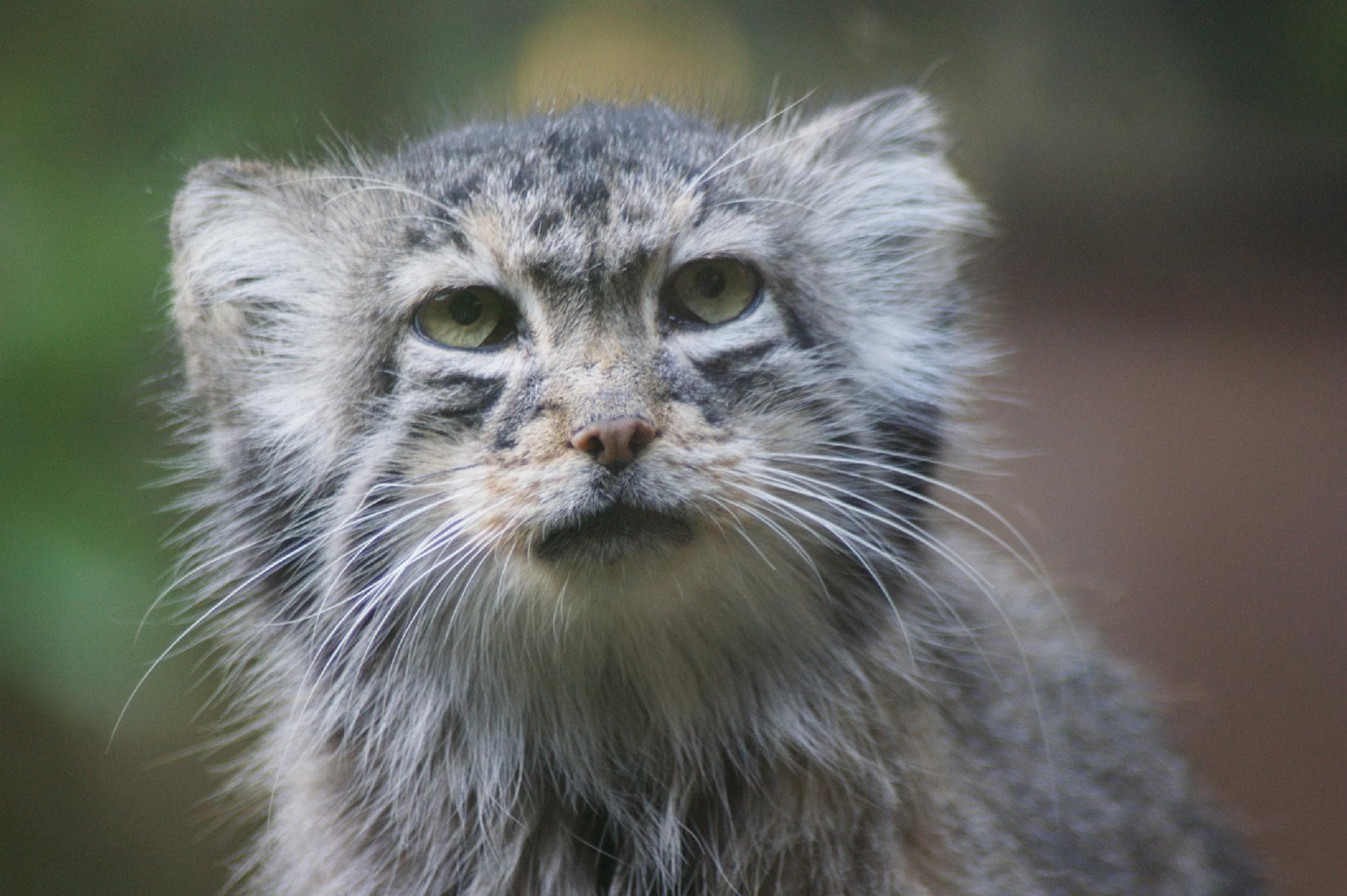
Clean Energy and Desert Wildlife: The Pallas's Cats of Zhangye
A wind farm in the desert north of Zhangye overlaps Pallas's cat habitat. How do we keep a solution to one environmental problem from creating another?

Want to turn the loop into continuity?
Join at the layer where you contribute most — Meaning, Pattern, Mechanism, or Continuity.

Meaning: translate sustainability into shared language through art, culture, and lived experience.

Pattern: turn nature and collections into shared, computable representations through digitization and open datasets.

Mechanism: build open knowledge infrastructure so nature’s design intelligence becomes accessible to all.

Continuity: provide the support that lets projects persist and compound — funding, hosting, and long-term stewardship.

Foundation: embed sustainability into learning at every level through curricula, workshops, and youth engagement.
Leave your email and tell us which layer you're coming from. We'll follow up with the most relevant next step.
Frequently asked questions
What is the SOS Foundation?
The Sustainability of Sustainability Foundation (SOS Foundation) is a 501(c)(3) public charity, founded in 2025, whose mission is sustaining humanity's ability to learn from nature. It works across research, education, and open knowledge infrastructure so that what nature teaches us is never lost.
What does "Sustainability of Sustainability" mean?
Sustainability is not self-sustaining. The knowledge, cultural frameworks, and institutional capacity that make sustainable practices possible require deliberate investment. The SOS Foundation works on that underlying capacity — how sustainability is understood, communicated, and practiced — so that it persists and grows.
How is the SOS Foundation's work organized?
SOS organizes its work around three interlocking pillars — Meaning (art and cultural language, e.g. Nature Salon), Pattern (digitization and natural patterns, e.g. the SOS Research Unit and Mountain Digital Twins), and Mechanism (knowledge systems and open infrastructure, e.g. Map of the Unknown and the Internet of Bioinspiration) — with SOS Education as a cross-cutting layer that connects them.
What is Nature Salon?
Nature Salon is the SOS Foundation's sustainability dialogue for artists, scientists, and entrepreneurs. It sits in the Meaning pillar: through art, design, and conversation it gives sustainability a shared language that people feel before it is explained.
What is Digital Naturalism?
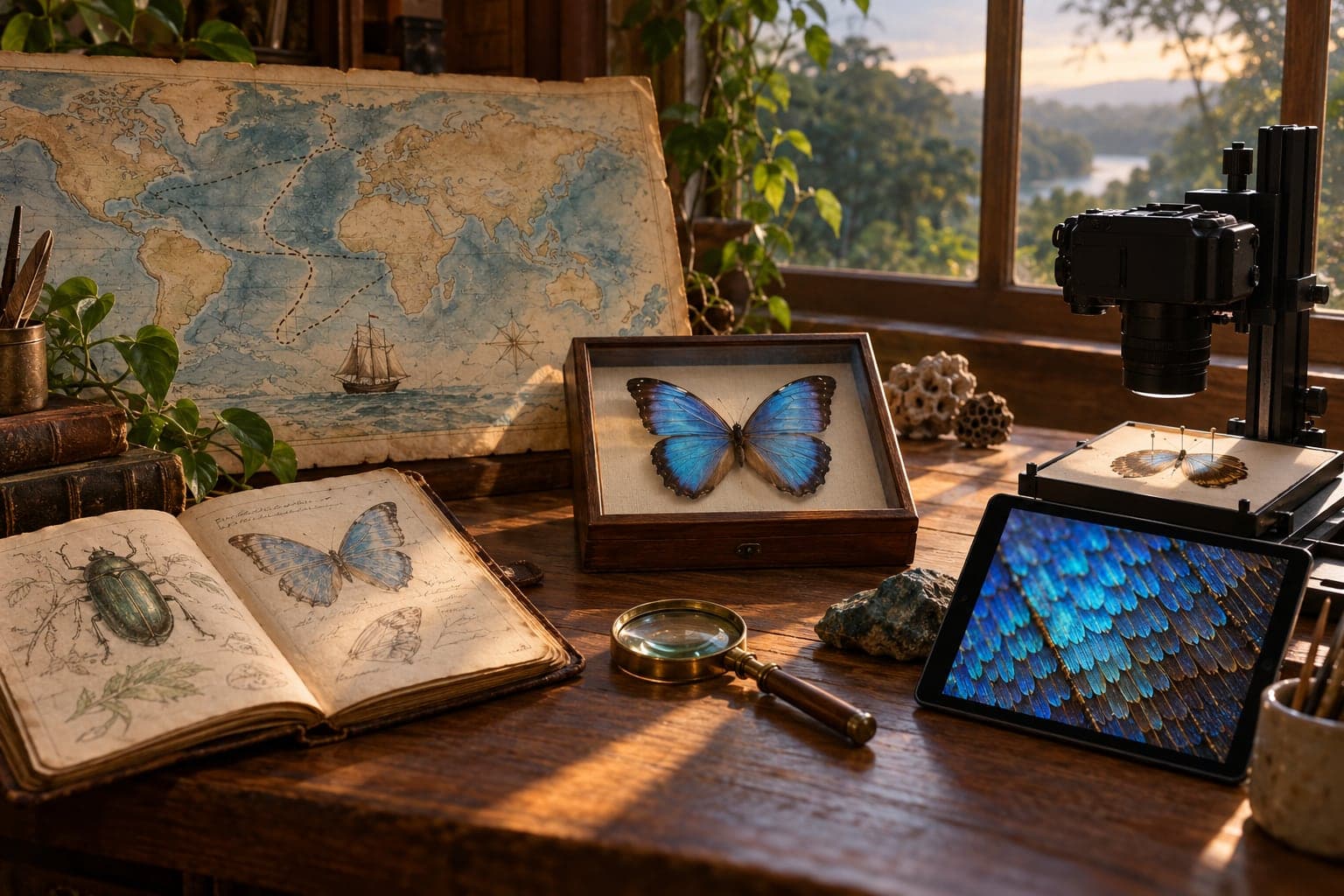
Digital Naturalism is a free interactive app from SOS Education that maps three natural history journeys: Charles Darwin's voyage on HMS Beagle, Alfred Russel Wallace's travels in the Amazon and the Malay Archipelago, and E. O. Wilson's fieldwork. Students sail each route stop by stop, commit to their own explanation before seeing the naturalist's, and use today's tools such as GBIF and digitized museum specimens. It needs no account, works on phones and tablets, is available in English and Chinese, and includes lesson flows for teachers. Its motto: learn from the great voyages, learn the tools of today, keep learning from nature.
What is bioinspiration, and what is the Internet of Bioinspiration (IoBI)?
Bioinspiration means understanding how evolved structures in nature can inform sustainable design and innovation. The Internet of Bioinspiration (IoBI) is part of the SOS Foundation's open knowledge infrastructure (Mechanism pillar): pipelines of large-scale digitization, imaging and spectral acquisition, and machine learning that translate natural systems into structured, computationally accessible data and connect biological patterns with engineering and design.
What is the SOS Research Unit?
The SOS Research Unit is the research arm of the SOS Foundation, co-directed by Dr. Cong Liu and Dr. Wei-Ping Chan, working across ecology, evolutionary biology, data science, and AI. Its research themes are nature digitization and bioinspired translation; knowledge infrastructure and digital ecosystems; conservation and species decline; evolutionary biology and functional morphology; climate change and mountain ecosystems; and biosecurity and invasion biology. Its flagship projects include the Internet of Bioinspiration (IoBI) and Mountain Digital Twins (MDT).
What is Map of the Unknown?
Map of the Unknown (formerly Discovery Commons) is an open research platform operated by the SOS Foundation — a shared map of what we do not yet understand, and where discovery can begin. A thoughtful question earns the same credit as a published result, and contributors of all backgrounds and education levels are welcome, from field naturalists to theoretical physicists and humanities scholars.
What is Ecotone (兼容並續)?
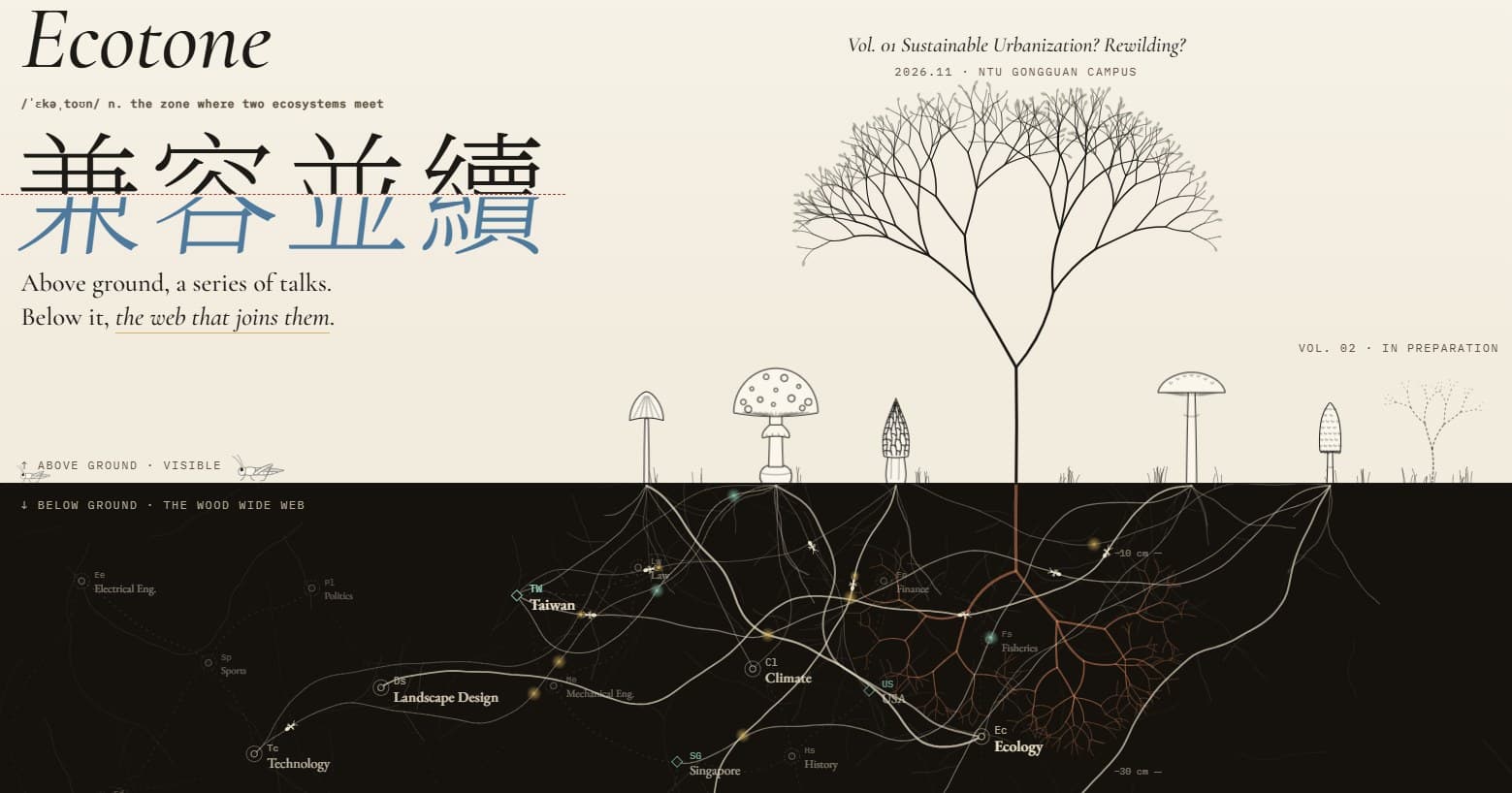
Ecotone (兼容並續) is an interdisciplinary sustainability forum co-organized by National Taiwan University, National Yang Ming Chiao Tung University, and the SOS Foundation. Named after the zone where two ecosystems meet, each volume brings together speakers from different fields and countries. Vol. 01, "Sustainable Urbanization? Rewilding?", takes place on 16 November 2026 at NTU's Gongguan Campus in Taipei and 17 November 2026 at NYCU's Hsinchu Campus. Details and registration: https://sustainable-ecotone.vercel.app/en
What is SOS Education?
SOS Education connects students and communities to real research. Its philosophy is that education should not end with learning but lead to real contributions. It has five tracks: Community & Communication, AI Skills, Digitize Nature, Mentored Research, and Real Contributions.
How can I get involved with or support the SOS Foundation?
Artists, researchers, museums, educators, system builders, and funders can join at the layer where they contribute most via the Get Involved form on the SOS website. Donations to the SOS Foundation (EIN 41-3097632) are tax-deductible to the extent allowed by law.